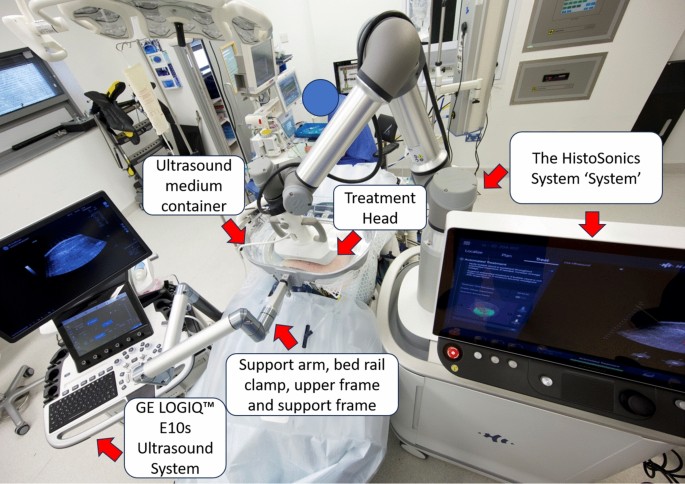
On 13 October 2026, a team from the University of Hong Kong and Gleneagles Hospital Hong Kong treated two patients, aged 70 and 71, for small primary kidney tumours using histotripsy. Each tumour measured about 2 cm, and each procedure took less than an hour. Both patients left hospital the following day without observable complications or surgical wounds.
Histotripsy uses focused ultrasound pulses to create tiny bubbles inside the targeted tissue. As the bubbles expand and collapse, they mechanically break down the tumour without an incision or a needle entering the kidney. The procedure is performed under general anaesthesia.
At a follow-up consultation two weeks later, both patients had stable kidney function. South China Morning Post also reported that one patient said he felt as though nothing had happened and was able to eat normally that evening. HKUMed described this as Asia's first use of histotripsy for kidney cancer.
The result is encouraging but preliminary. Kidney-cancer histotripsy remains investigational, and two patients with two weeks of follow-up cannot establish long-term tumour control or prove a cure. Further clinical research and follow-up are needed.